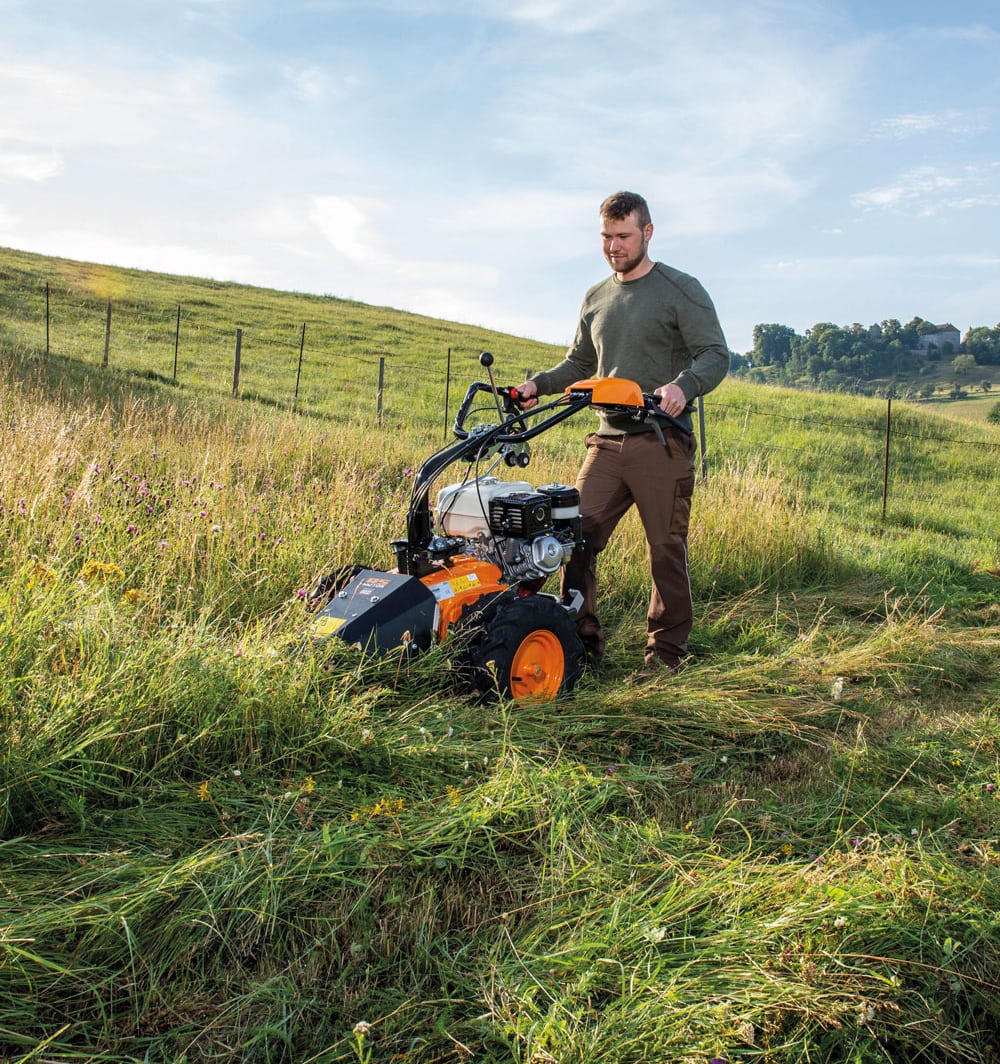
Gentle cutting with double-bladed cutting bar
Promote biological diversity
Ecologically oriented maintenance means that mowing must take into account ecological relationships and nature conservation goals so that biodiversity increases in the medium term.
Protect animals and insects
Unfortunately, there is no ideal maintenance period for all animal and plant species. Therefore, all maintenance planning must take into account which species are to be protected and promoted.
Likewise, there is no mowing alternative that protects animals in particular. To minimize the effects of mowing on the fauna, the following relationships should be known.
Mowing: As little as possible, as often as necessary
For ecologically oriented landscape maintenance, the following recommendations are relatively easy to implement and should become standard.
Maintenance frequency:
- Principle: Keep it to a minimum
- Adapt to the species to be promoted and the type of meadow
- For Central European meadows, a minimum of about one or two mowings per year
- In any case, prevent the spread of bushes
- Small, coarse pastures can be mowed and collected only once every two to three years
- For nutrient-rich sites, two to three mowings per year are initially necessary, followed by collection of clippings
- Not taking any maintenance measures is not an alternative. Plants worth protecting lose their habitat as a result
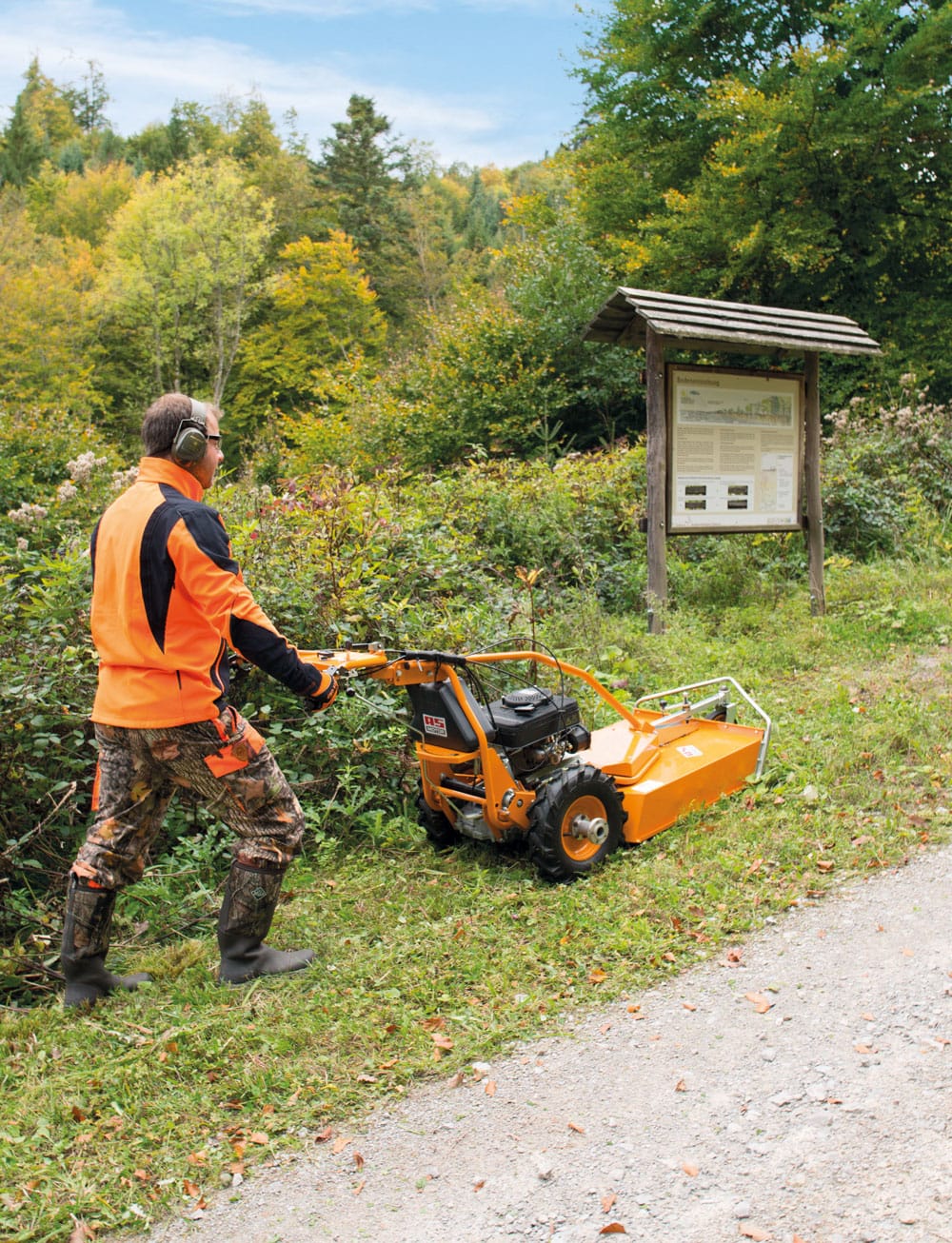
Keep peripheral areas open

Insect-friendly mowing in the morning or evening

A very late mowing in the autumn protects ground-nesting birds

Avoid calves and wild animals in the evening before mowing
Maintenance period:
- Mowing work before spring begins must be completed by March 15
- Flowering areas: After most plants (50-70%) have faded. This corresponds to ”maintenance after sowing”
- Areas with high insect populations: In the early mornings or late evenings for flower-seeking insects
- Generally on cooler, windy days with cloudy weather for many insect species
- Bird protection: Start at the earliest in mid-July, preferably August/September
- Wildlife: Similar to bird protection. The best way to protect deer and wild animals is to drive them away the evening before mowing by driving them from the area and placing scent marks
- Delayed mowing from spring to summer is generally considered positive for plants, insects, and spiders
- A very late mowing in the autumn is perfect for birds, mammals, amphibians, and reptiles. However, it leads to disadvantages for plant diversity
- Mowing outside the vegetation period is not recommended, as the clippings are not moved and animals are disturbed in their winter rest

Mowing direction:
- The mowing direction is crucial for animal protection
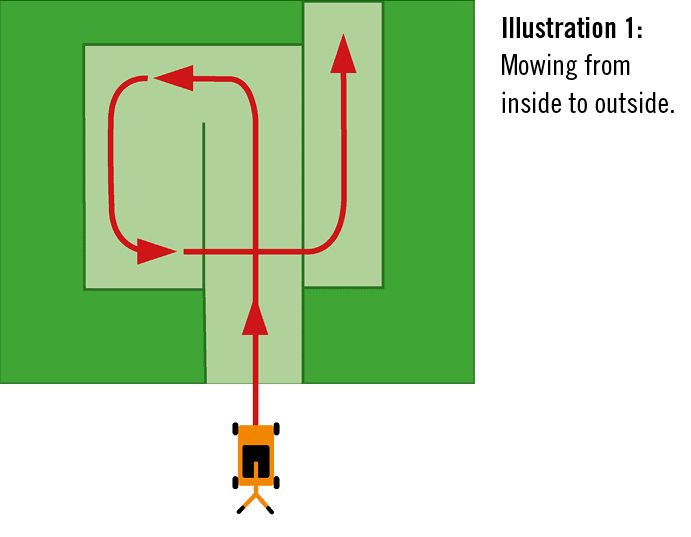
- Mowing from the middle of the area to the outside is recommended. Animals are driven to the edge and can thus flee into the protection of vegetation (see figure 1)
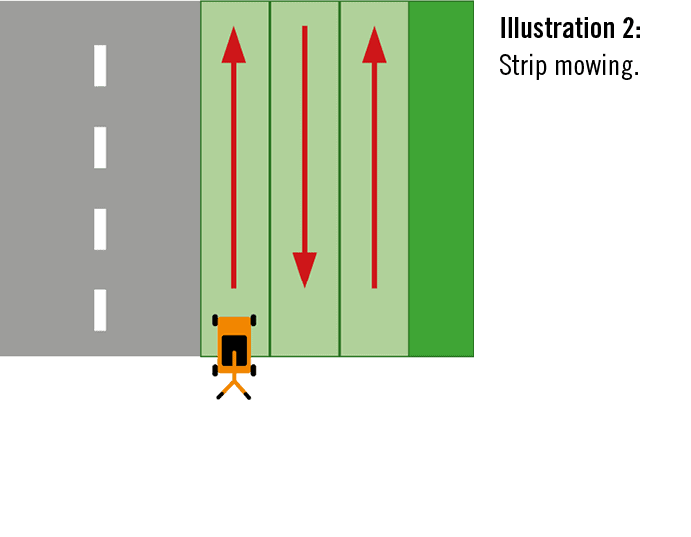
- Alternatively, striped mowing can be used. Here, animals are also driven to the edge (see figure 2)


Partial maintenance:
- Avoid large-scale and simultaneous mowing
- Maintain unmowed areas as refuge areas (old grass strips). Here, subpopulations can develop undisturbed and then repopulate the mowed areas
- Old grass strips should ideally measure 10 x 50 m and be mowed the following year
- If possible and in accordance with the protection goal, 10 to 20% of the area should be left unmowed
- Sectional mowing of areas according to the principle of moving or rotating fallow strips (see illustration 3)
- Striped mowing (mosaic mowing) is useful if the entire area must be mowed within two weeks (see illustration 4)